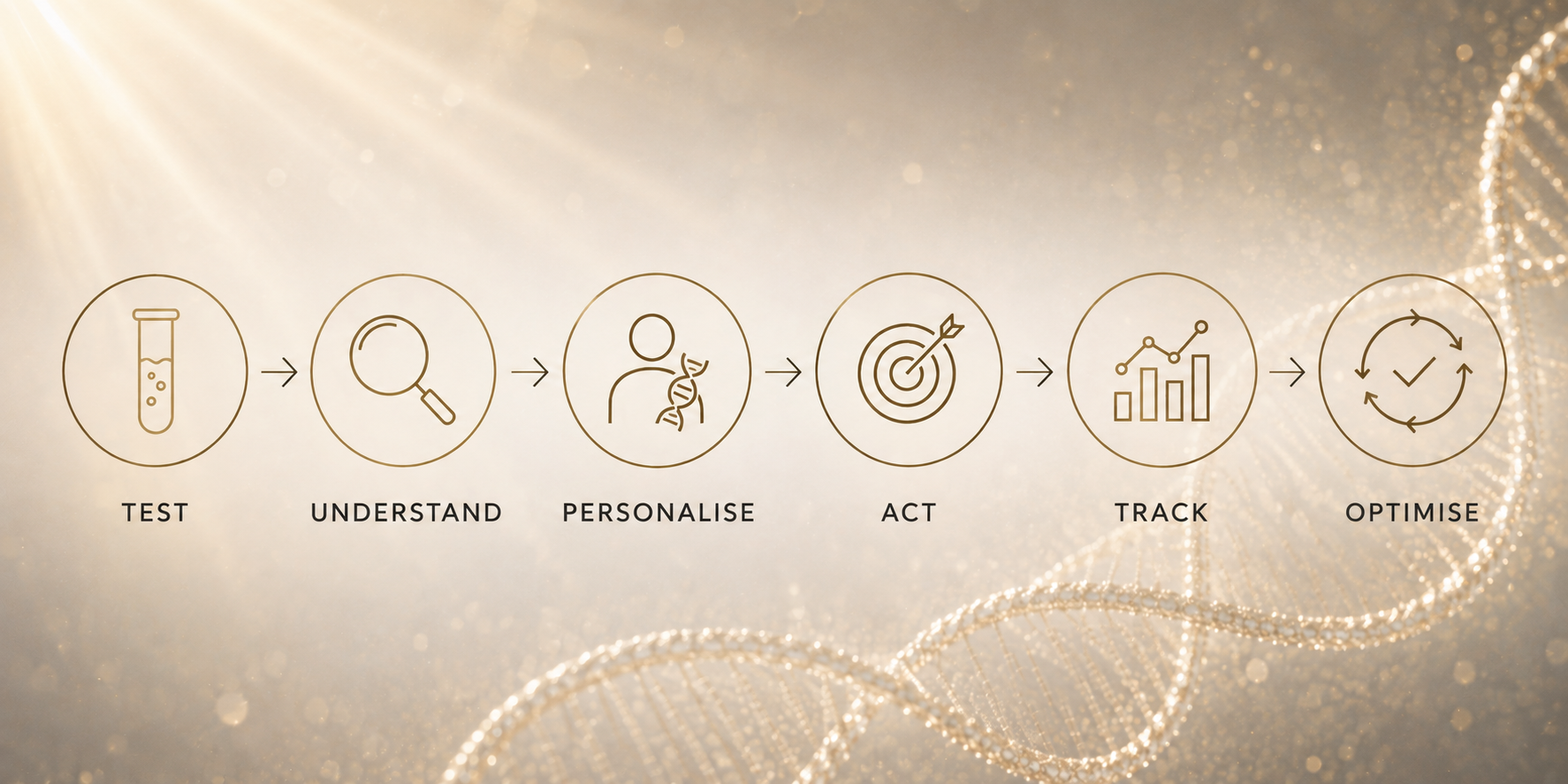
DNA and epigenetic testing has come a long way.
Today, a simple saliva sample can give you insights into your genetics, biological age, methylation, metabolism and much more.
But there’s something most people never think to ask:
Who was the data behind my results actually based on?
Because here’s the problem. Historically, health research hasn’t treated male and female biology separately. And when you understand how we got here, it becomes pretty shocking.
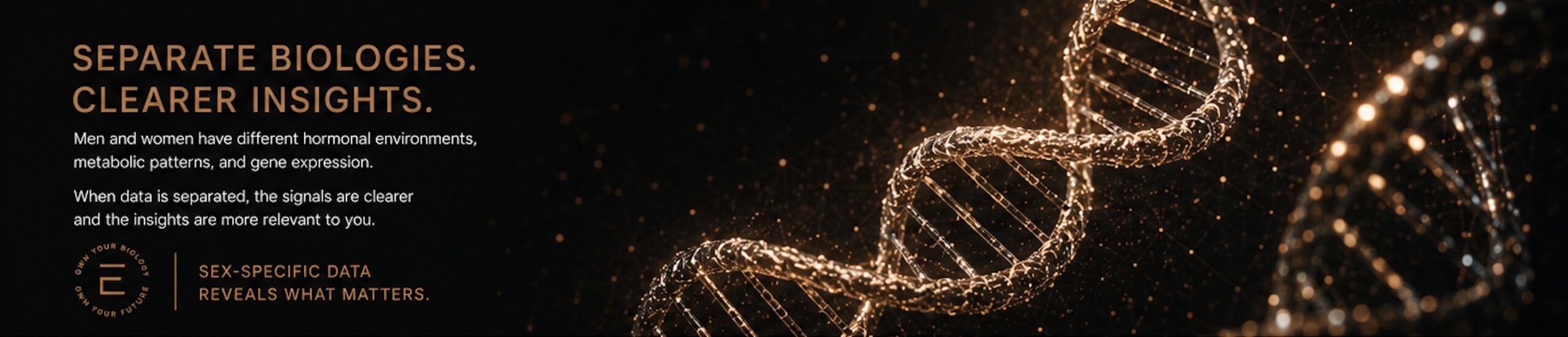
Women weren’t properly represented in clinical research until 1993
For decades, medical research was overwhelmingly centred around men.
It wasn’t until 1993, with the NIH Revitalization Act in the United States, that the inclusion of women in NIH-funded clinical research became a requirement.
Think about what that means.
For years, much of our understanding of health, disease, medication and biology was developed from research in which women were either underrepresented or sometimes excluded altogether.
Women were often expected to fit into a medical model largely developed around male biology.
Research has improved enormously since then, but there’s still a legacy from that history.
And when it comes to DNA and epigenetic testing, there’s another important issue: mixed data.
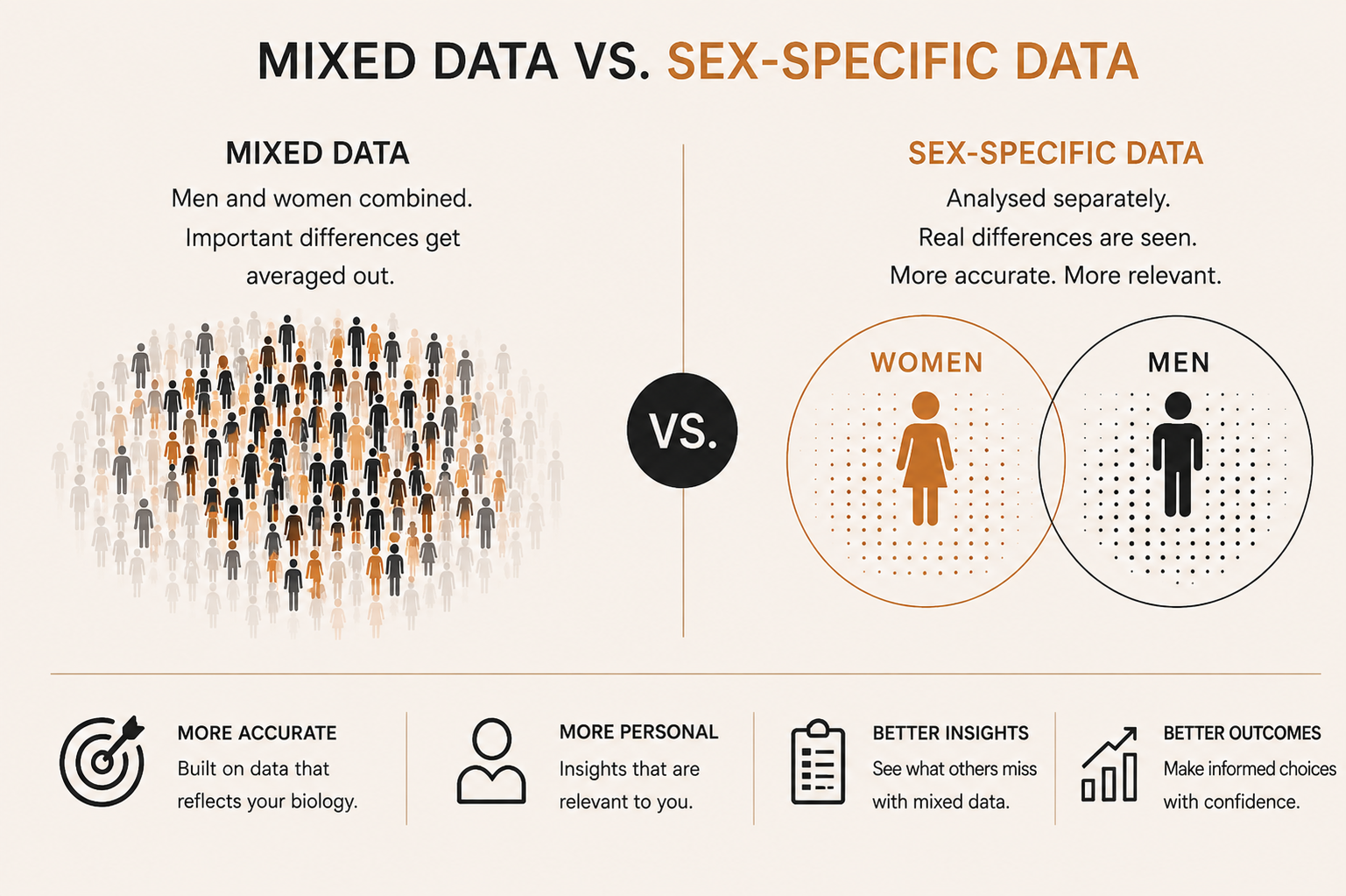
So, what does “mixed data” actually mean?
It sounds complicated. It really isn’t.
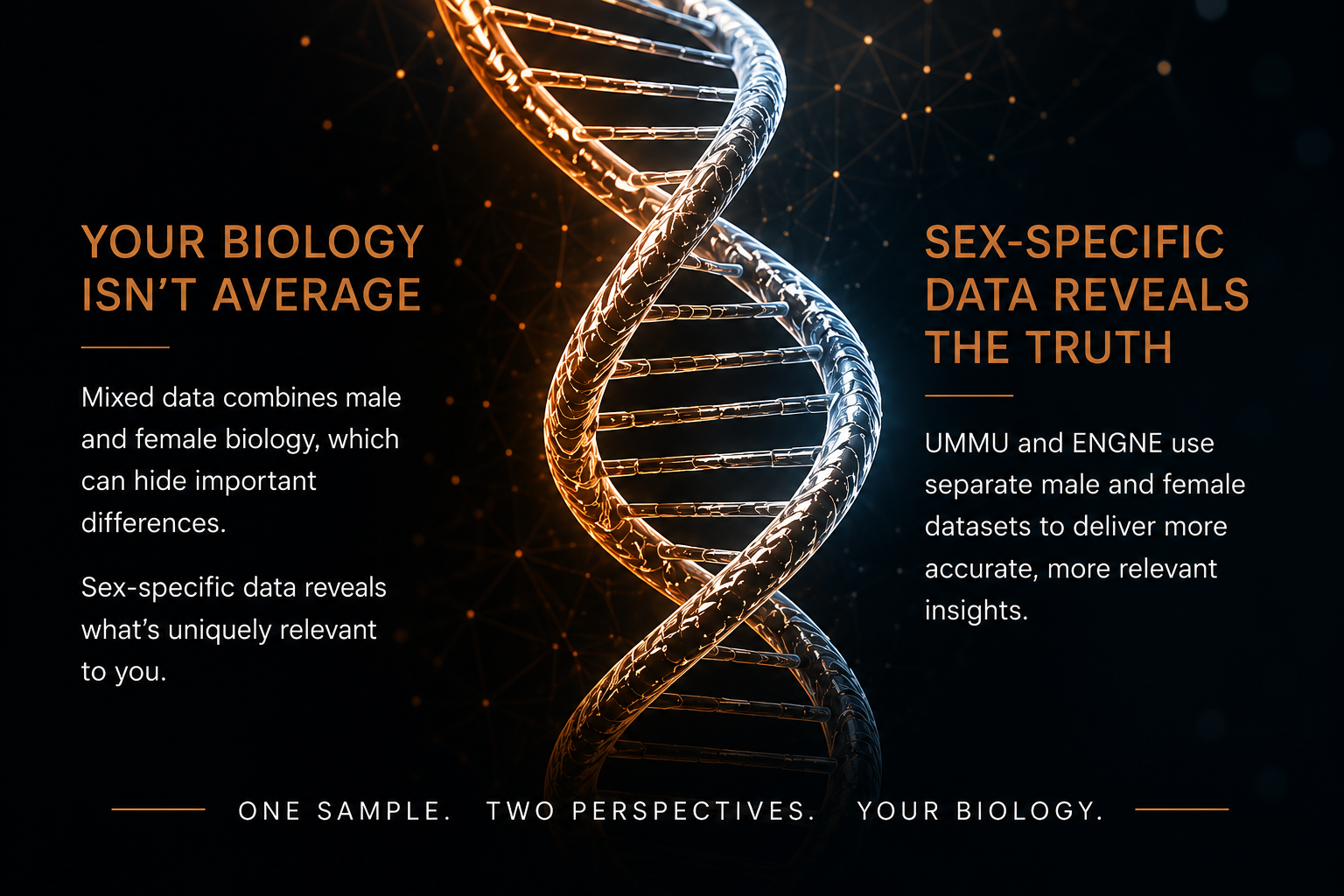
Imagine researchers collect biological information from thousands of men and thousands of women, put everybody into one big group and use that combined information to establish what’s “normal”.
That’s mixed data.
The problem is that men and women aren’t biologically identical.
We have different hormonal environments, body compositions, metabolic patterns and ageing processes. There can also be sex-related differences in gene expression and epigenetic patterns.
So why would we automatically want to average everything together?
Here’s an easy way to think about it.
Imagine taking the average shoe size of 5,000 men and 5,000 women and then telling you:
“This is the shoe size you should be.”
The maths might be correct.
But the result might not be particularly useful for you.
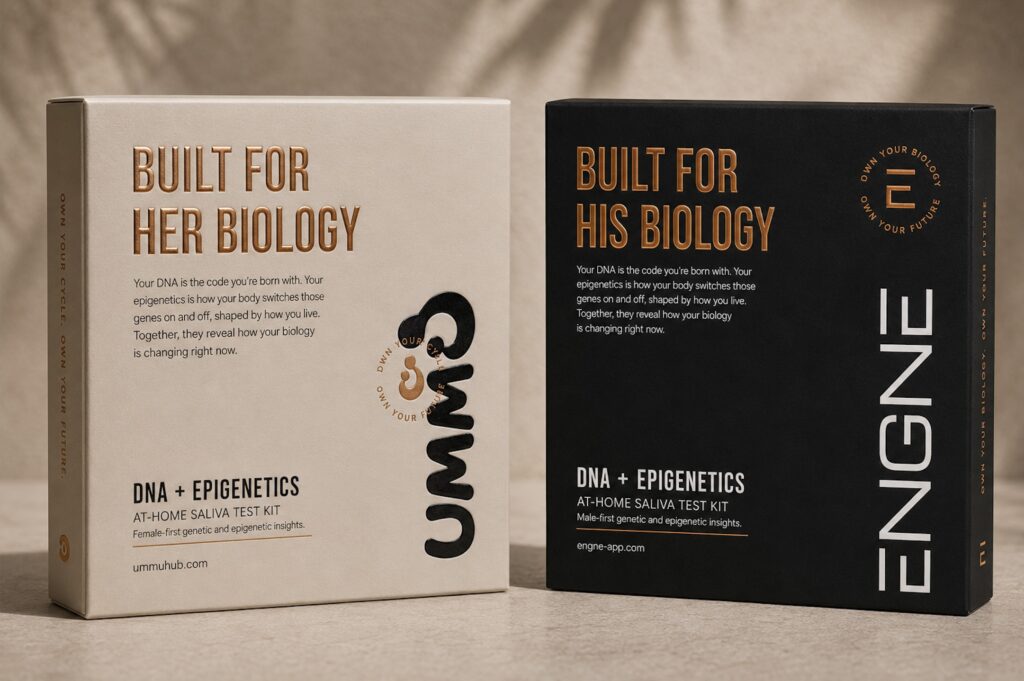
That’s the problem UMMU and ENGNE were created to address.
Most DNA and biological age tests don’t measure the same thing
There’s another misconception around DNA and epigenetic testing.
You might see several tests online around a similar price point and assume they’re basically offering the same thing.
They’re not.
Some tests concentrate heavily on inflammation.
Some look predominantly at DNA methylation, which, in simple terms, is one of the ways your body regulates whether certain genes are more or less active.
Others focus on glycation and biological ageing, looking at processes associated with how your body is ageing.
Some analyse particular genetic variants or methylation pathways.
These things can all provide useful information.
But they’re pieces of a much bigger puzzle.
And many existing approaches use models or reference populations containing data from both sexes.
UMMU and ENGNE do things differently
This is where UMMU and ENGNE change the conversation.
Instead of taking male and female biology, mixing the data together and then applying that model back to everyone, the platforms have been developed separately around female and male biology.
UMMU is built for women.
ENGNE is built for men.
UMMU’s epigenetic ageing model was trained exclusively on female samples and subsequently validated using data from thousands of women.
ENGNE takes the same sex-specific philosophy for men, with an epigenetic ageing model trained around male biology.
It sounds like such a simple idea.
If you’re a woman, compare your biological patterns against relevant female data.
If you’re a man, compare yours against relevant male dataYet that distinction represents a significant change in how personalised biological information can be interpreted.
DNA and epigenetics: what’s the difference?
This is probably the easiest way to understand it:
Your DNA is the code you were born with.
You can’t change the genes your parents gave you.
Your epigenetics helps tell us what’s happening around that code now.
Think of your DNA as a set of instructions and your epigenetics as some of the switches controlling how those instructions are being used.
Those switches can be influenced by things such as ageing, nutrition, exercise, sleep, stress and your environment.
That’s why looking at DNA and epigenetics together can be so powerful.
One helps tell us what you inherited.
The other can help us understand what’s happening within your biology today.
It’s about more than one biological age number
UMMU and ENGNE aren’t designed simply to give you one number and send you on your way.
Your at-home saliva test provides a much broader picture, with insights across areas such as biological ageing, cardiovascular health, metabolism, methylation, nutrition, fitness and recovery, depending on your individual results and platform.
The goal isn’t simply to collect more data.
It’s to help make that data more relevant to you.
Because what good is knowing your biological age or genetic information if you don’t understand what to do with it?
And when you test through Harley Longevity Club, we take it further….
When you take your UMMU or ENGNE DNA and epigenetics test through Harley Longevity Club, your journey doesn’t end when your results arrive.
You’ll receive a personalised one-to-one consultation with one of our specialists, either in-house or online.
We’ll take you through your results, explain what they mean in plain English and help you understand where you may want to focus next.
You’ll also receive three complimentary clinical assessments:
Body Composition Assessment
A deeper look at your body composition, including areas such as muscle mass and body fat.
FibroScan Liver Assessment
A non-invasive assessment providing additional information about your liver.
Oxidative Stress Test
An insight into the balance between oxidative stress and your body’s antioxidant defences.
Together, these assessments help us look beyond what’s written in your DNA and understand more about what’s happening inside your body right now.
Your biology isn’t average. Your results shouldn’t be either.
Personalised health should actually be personal.
UMMU and ENGNE represent a different approach to DNA and epigenetic testing: female biology analysed through a female-specific model and male biology analysed through a male-specific model.
Because you’re not an average of thousands of men and women.
You’re you.
And the more accurately we can understand your biology, the better informed your next steps can be.
Start your DNA and epigenetics journey with Harley Longevity Club.
One saliva sample. Your personalised results. A one-to-one specialist consultation. Three complimentary clinical assessments.